April 19, 2026
by Ambassador Jose Manuel del Gallego Romualdez
Editor’s Note:
Originally published as an opinion editorial in the Philippine Star on April 19, 20226
…
Now more than ever, the Association of Southeast Asian Nations must move with utmost urgency to push for a binding Code of Conduct in the South China Sea – firmly supported by like-minded nations that understand what is at stake not only for our region, but for the global economy.
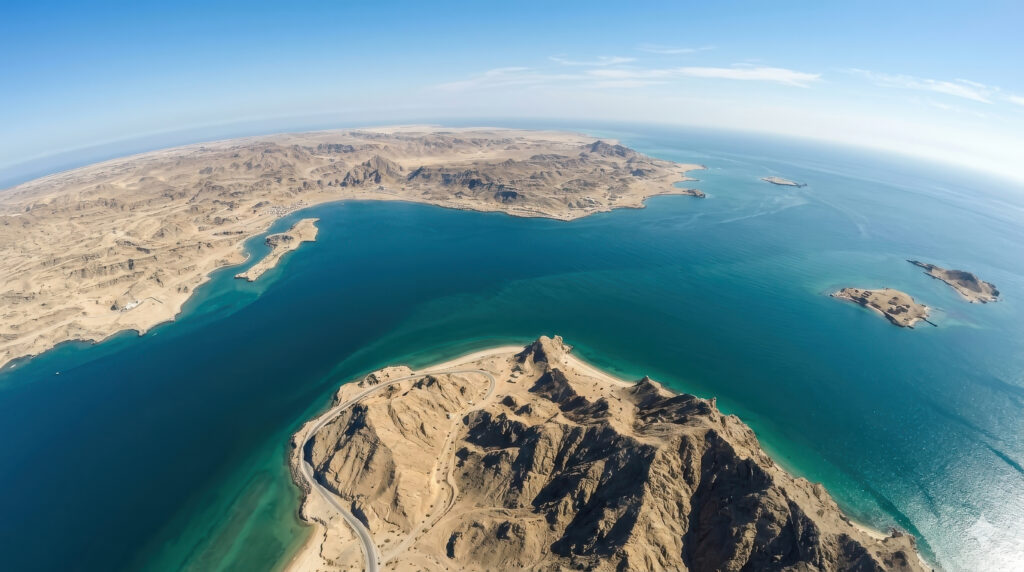
Recent tensions in the Strait of Hormuz have once again reminded the world how fragile critical trade routes can become when geopolitical rivalries intensify. That narrow passage, through which roughly a fifth of the world’s oil supply flows, has long been a flashpoint. Even the slightest disruption – or the mere threat of it – immediately sends shockwaves through global markets, affecting prices, supply chains and economic stability far beyond the region. The lesson is not distant. It is immediate, relevant and urgent.
If anything, the South China Sea is even more consequential. It is not just a regional waterway – it is a global economic lifeline, with an estimated $3 trillion to $5 trillion worth of trade (about one third of all global maritime trade) passing through it annually – carrying energy supplies, manufactured goods, food and essential commodities that sustain economies all across Asia, the United States, Europe and beyond. It goes without saying that any prolonged instability in these waters would not remain contained; it would ripple across continents, disrupting industries, raising costs and undermining growth.
This is precisely why no single country should be allowed to dominate or control this shared maritime space.
Freedom of navigation is not a slogan. It is a principle that underpins the modern global economy, ensuring that all nations – large and small – can move goods and resources without fear of coercion or obstruction. But when that principle is challenged, whether through excessive maritime claims, aggressive maneuvers or the militarization of key features, the consequences are immediate and far-reaching. Considering the current situation, ASEAN now finds itself at a defining crossroads.
For years, discussions on a Code of Conduct (COC) have progressed, but at a measured and often cautious pace. While that caution may once have been understandable, it is no longer sufficient today. The geopolitical environment is shifting, and the risks are growing. The experience of the Strait of Hormuz shows just how quickly tensions can escalate and how costly uncertainty could become. Clearly, we cannot afford to wait for a similar crisis to unfold in our own region before taking decisive action.
A meaningful COC must go beyond general principles or diplomatic language. It must be clear, credible and most importantly, binding. It should establish rules that prevent miscalculation at sea, reduce the risk of confrontation and provide mechanisms for peaceful dispute resolution. It must be anchored firmly in international law, particularly the principles enshrined in the United Nations Convention on the Law of the Sea, which remains the cornerstone of maritime governance. Equally important, it must reflect fairness.
The South China Sea is not the domain of any single nation – it is a shared space, used by many and vital to all. A Code of Conduct must preserve the rights of coastal states while ensuring that the broader international community continues to enjoy unimpeded access to this critical maritime corridor.
But ASEAN cannot – and should not – carry this burden alone. Support from like-minded countries will be essential. These are nations that have a clear and legitimate interest in maintaining open sea lanes, upholding international law and ensuring stability in one of the world’s most important regions. Their role is not to inflame tensions or create blocs, but to reinforce a rules-based order that benefits everyone.
In Washington, this point is well understood. In my conversations with policymakers, legislators and members of the strategic community, there is a consistent recognition that the South China Sea is not merely a regional concern but a global one. There is broad bipartisan support for freedom of navigation and for efforts that promote stability and predictability in the Indo-Pacific region. The United States – along with its allies and partners – clearly recognizes that what happens in these waters has direct implications for global trade and economic resilience.
I remember a recent discussion with a senior official who put it quite plainly: “The world cannot afford another Strait of Hormuz situation – especially not in the South China Sea.” It was a simple statement, but one that essentially captured the urgency of the moment, and that urgency must now translate into action.
ASEAN has always prided itself on consensus-building and diplomacy. These remain its strengths. But leadership today requires more than dialogue – it requires resolve.
The region must move decisively to conclude a binding Code of Conduct that is both respected and enforced. The stakes are simply too high for anything less. If we fail to act, we risk allowing tensions to fester and escalate, misunderstandings to multiply and the rules that have long governed our seas to erode. If we succeed, however, we can ensure that the South China Sea remains what it should be: a sea of peace, stability and cooperation.
The choice is clear.
As ASEAN chair, the Philippines is in a unique position to help drive this agenda forward. It is an opportunity not just to convene discussions, but to shape outcomes – to ensure that the region moves with purpose and clarity toward a framework that benefits all.
In the end, this is not about confrontation; it is about preservation of peace, of stability and of a system that has allowed nations to prosper together. Because once the rules disappear, it is no longer law that governs the sea – but might and power.
Ambassador Jose Manuel del Gallego Romualdez is the current Philippine Ambassador to the United States, in office since November 2017 and reappointed in 2022. Based in Washington, D.C., he is a veteran journalist and executive who manages key PH-US security and economic relations.